

Emergency Sewer Line Repair in Hampton Roads

Table of Contents
Emergency Sewer Line Repair in Hampton Roads: What to Do First
Immediate Safety Steps During a Sewer Backup
When a Clog Becomes a Sewer Line Backup
Signs of a Damaged Sewer Line You Should Not Ignore
How a Sewer Camera Inspection Pinpoints the Problem
Trenchless Sewer Repair vs. Traditional Digging
What Emergency Sewer Line Repair Costs Depend On
The Variables That Move the Number
After-Hours and Emergency Fees: What to Ask
Insurance: Why Coverage Depends on the Policy and the Cause
What a Fair Estimate Looks Like
Why Hampton Roads Sewer Lines Fail
The Local Conditions Behind Most Failures
How to Tell Which Cause You Are Dealing With
Prevention and Post-Repair Follow-Up
How to Choose a 24/7 Emergency Plumber
Conclusion: Get Your Sewer Line Fixed Fast
Frequently Asked Questions
Last Updated: October 7, 2026
Emergency Sewer Line Repair in Hampton Roads: What to Do First
A backed-up sewer line gets worse by the hour.
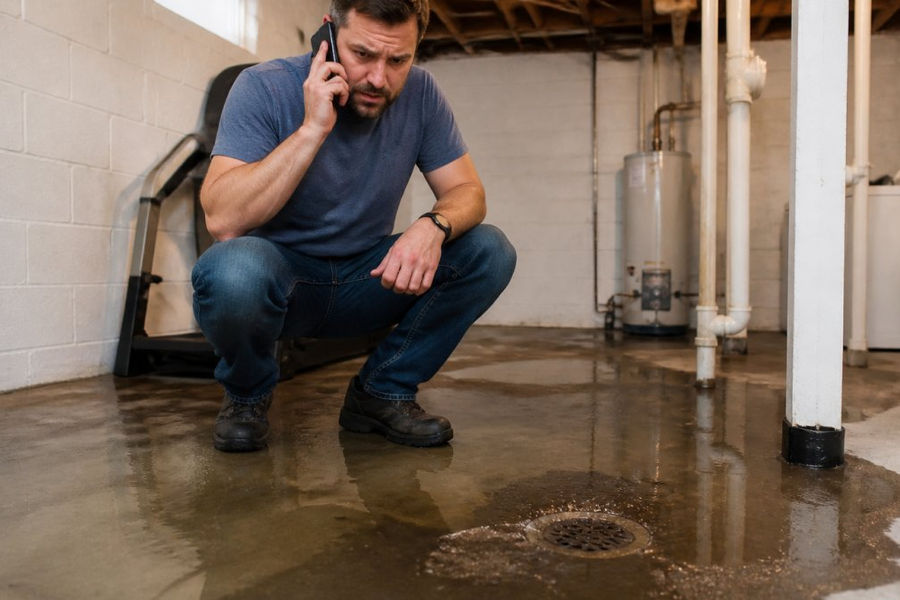
The short answer: stop using water immediately, protect people and property, then call a licensed 24/7 plumber.
Immediate Safety Steps During a Sewer Backup
Safety comes before cleanup. Sewage carries bacteria and pathogens, so treat any backup as a health hazard.
Stop all water use. No showers, laundry, dishwashing, or flushing.
Keep children and pets away from the affected area.
Cut power to any flooded room at the breaker if it is safe to reach.
Wear gloves and boots if you must move items.
Do not run a plunger or chemical drain cleaner into a main line backup. You can push waste back up or damage pipes.
Call a 24/7 emergency plumber and describe what you see.
If you smell gas or see standing water near electrical outlets, leave the home and call for help from outside.
Watch Out Pouring chemical drain cleaner into a backed-up main line is one of the most common homeowner mistakes. It rarely clears the blockage, and it can turn a routine sewer cleaning into a hazardous repair job.
When a Clog Becomes a Sewer Line Backup
A single slow drain is usually a local clog. A sewer line backup is different: wastewater appears in multiple fixtures at once, often the lowest drains in the home.
Watch for these signals:
Two or more drains backing up together
Gurgling sounds from toilets or tubs
Dirty water rising in a floor drain or basement drain
When several fixtures fail at once, the blockage is almost always in the main sewer line, not the individual drain.
Signs of a Damaged Sewer Line You Should Not Ignore
The signs of a damaged sewer line build gradually, so homeowners often miss them until the line fails.
Common warning signs include:
Repeated clogs in the same drain, even after professional drain cleaning
Slow drainage throughout the house
Sewage smells in the yard or basement
One recurring clog is a nuisance. Three in a year points to a cracked, root-invaded, or collapsed pipe.
Pro Tip Mark your calendar when a drain clogs. If the same fixture backs up twice within a few months, ask for a camera inspection instead of another round of drain cleaning. It costs less than guessing.
How a Sewer Camera Inspection Pinpoints the Problem
A sewer camera inspection is the difference between guessing and knowing. A flexible camera travels the line and shows the exact location, cause, and severity of the problem.
During the inspection, a technician looks for:
Tree roots entering through joints or cracks
Grease and scale buildup along the pipe walls
Bellies, where the pipe sags and holds water
The repair method depends entirely on what the camera finds. A root intrusion at one joint may need only spot repair; a collapsed clay pipe under a driveway may need full replacement.
Ask to see the footage, and have the plumber explain the recommended repair.
Trenchless Sewer Repair vs. Traditional Digging
For most residential lines, trenchless sewer repair is the better choice. It restores the pipe through small access points instead of a long open trench, protecting lawns and driveways.
The two main trenchless methods are:
Pipe bursting: A bursting head pulls a new pipe through the old one, breaking the old pipe outward. It works well when the existing line is badly damaged.
Cured-in-place lining: A resin liner is inserted and cured to form a new pipe inside the old one. It suits lines that are cracked or root-invaded but still structurally sound.
Traditional digging still has a place: if the line is deeply collapsed, badly misaligned, or the soil is unstable, open excavation may be the only reliable option.
Factor | Trenchless Repair | Traditional Digging |
Yard disturbance | Minimal | Extensive |
Typical timeline | Often 1-2 days | Several days |
Best for | Cracks, roots, isolated damage | Severe collapse, unstable soil |
Landscaping impact | Low | High |
A camera inspection determines which method fits.
What Emergency Sewer Line Repair Costs Depend On
Nobody can quote a sewer repair honestly over the phone. A good plumber can walk you through the variables that move the number.
The Variables That Move the Number
Access. A line under an open lawn is cheapest to reach. A line under a poured driveway or finished basement floor adds excavation, restoration, and sometimes concrete work.
Depth. Deeper lines require shoring, more labor, and more spoil removal, often the biggest swing factor on an open-cut job.
Length. Cost scales with linear feet of pipe repaired or replaced, not the size of the backup inside.
After-Hours and Emergency Fees: What to Ask
Emergency work costs more than a scheduled appointment, but the structure varies. Before you authorize anything, ask:
Is there a separate after-hours or emergency dispatch fee, and what is it?
Does the diagnostic or camera inspection carry its own charge, and is it credited toward the repair if you proceed?
Is the estimate flat rate or time-and-materials? If time-and-materials, what is the hourly rate and how is it billed after hours?
What triggers additional charges mid-job, unexpected depth, unstable soil, a second failed section?
Will I get a written scope before work begins, and will you call me before exceeding it?
A reputable company answers these without hesitation. Vague answers are your signal to keep calling.
Insurance: Why Coverage Depends on the Policy and the Cause
There is no universal answer to "does insurance cover this." Most policies distinguish between sudden, accidental damage and gradual deterioration, a line cracked last week is a different claim than a clay tile line root-invaded for a decade.
What to do:
Call your insurer or adjuster early and ask two questions: does my policy cover the cause of this damage, and does it cover sewage backup specifically?
Ask whether the policy covers access and restoration, or only the pipe repair itself.
Keep every document: the camera footage, the technician's written findings, photos of the backup before cleanup, and the itemized invoice.
A camera inspection is also evidence. Footage showing a specific cause supports a claim far better than a verbal description. Ask the plumber to save the recording and put the findings in writing.
What a Fair Estimate Looks Like
A written estimate should identify the affected section by location and length, state the proposed method, list what is and is not included (permits, restoration, disposal), and give a total or bounded range. Compare the scope, not the bottom line, a lower number that excludes restoration or permits is not actually lower.
For a written estimate on your specific line, contact Causeway Plumbing LLC directly.
Key Takeaway A clear diagnosis, not a lowball phone quote, is what protects your wallet. Insist on a camera inspection, a written scope, and a straight answer on after-hours fees before authorizing any sewer line repair.
Why Hampton Roads Sewer Lines Fail
Local conditions accelerate wear in ways homeowners elsewhere rarely deal with. Knowing which cause is most likely on your street helps you ask better questions when you call.
The Local Conditions Behind Most Failures
Soil movement. The region's clay-heavy soils and high water table shift with wet and dry cycles.
Aging infrastructure. Many older neighborhoods still run on clay tile or cast iron laterals installed decades ago.
Tree roots. Mature trees seek moisture and find it inside sewer joints.
Heavy rain and tidal flooding. Intense rain saturates the ground and pushes extra volume through already-stressed lines.
How to Tell Which Cause You Are Dealing With
You do not need to diagnose the line yourself, but the symptom pattern points a professional in the right direction:
Repeated clogs at the same fixture, no rain correlation → likely root intrusion or scale buildup at a specific joint.
Backups that track heavy rain or high tides → likely infiltration, a sagging section (belly), or a partially collapsed pipe holding water.
Sewage odor in the yard, soggy patches, or unusually green grass over the sewer route → likely a leak or crack in the lateral.
Slow drainage throughout the house that worsens over months → likely progressive buildup or a developing blockage in the main line.
None of these patterns confirms a cause on its own, a camera inspection does. But describing the pattern when you call helps the dispatcher send the right equipment.
Prevention and Post-Repair Follow-Up
Once a line is repaired, the goal shifts to keeping it that way. A few practices make a measurable difference:
Schedule a camera inspection every few years if your home has clay tile, cast iron, or a history of root intrusion. Catching a root mass before it blocks the line is far cheaper than an emergency call.
Be careful what goes down the drain. Grease, wipes labeled "flushable," and heavy paper products are common contributors to main-line blockages.
Watch the trees. If you are planting near the sewer route, choose species with less aggressive root systems, and keep large trees a reasonable distance from the lateral.
Address slow drains early. A drain that is slower than it used to be is information, not a nuisance.
After a repair, ask for three things: camera footage of the completed work, a written summary of what was repaired and how, and any flow testing performed. If trenchless lining or pipe bursting was used, ask about the new material's expected service life and warranty. Keep those documents with your home records, they matter at resale and for insurance claims.
Pro Tip If your backups happen during or right after heavy rain, say so when you call. That single detail often changes which diagnostic steps the technician runs first and can save an hour of guesswork on site.
How to Choose a 24/7 Emergency Plumber
Not every plumber offering 24/7 service actually answers the phone at 2 a.m. Verify before you need them.
Use this checklist:
Confirm the company is licensed and insured, and ask for the license number
Ask whether emergency calls reach a live person or a voicemail
Request a written estimate before work starts
Ask if camera inspection is included in the diagnostic
Causeway Plumbing LLC is a full-service plumbing company serving residential and commercial customers across greater Hampton Roads.
When you call, we tell you what we find and what it takes to fix it.
If you are a property manager with older rental units and recurring drain issues, ask about our ongoing maintenance approach.
Conclusion: Get Your Sewer Line Fixed Fast
A sewer backup will not fix itself, and every hour of delay adds risk to your home, health, and budget. Stop the water, protect your household, and call a licensed emergency plumber who will diagnose the line with a camera before quoting a repair. Causeway Plumbing LLC offers camera-based diagnosis, and both trenchless and traditional repair options across Hampton Roads.
Frequently Asked Questions
What should I do first during a sewer line emergency?
Stop using all water immediately. Don't flush toilets, run sinks, or use the washing machine. If sewage is backing up, turn off the main water supply and avoid contact with the wastewater. Open windows for ventilation and move valuables away from the affected area. Then call an emergency plumber like Causeway Plumbing.
How can I tell if my sewer line is broken or just clogged?
Multiple slow drains throughout the house, gurgling toilets, and sewage odors usually point to a blockage or break. A single slow drain is often just a local clog. If you notice soggy patches in the yard, unusually green grass, or repeated backups after plunging, the line is likely damaged. A sewer camera inspection confirms the difference by showing the pipe interior directly.
Is a sewer line backup an emergency?
Yes. A sewer line backup introduces wastewater into your home, which carries bacteria and creates health risks. It also can cause significant property damage if left untreated. Most backups won't resolve on their own, and waiting can lead to more expensive repairs. Call a 24/7 emergency plumber as soon as you notice sewage backing up.
How long does emergency sewer line repair take?
Timeline depends on the cause and repair method. A simple clog cleared with drain cleaning might take one to two hours. Trenchless sewer repair for a damaged section often finishes in a day. Traditional excavation for a full line replacement can take several days. A camera inspection gives you a clear estimate before work begins.
Get In Touch


Comments