

24/7 Emergency Plumber Near Me Now: What to Know

Table of Contents
What Counts as a Plumbing Emergency (And What Can Wait)
Situations That Need a Call Right Now
Problems You Can Schedule for the Morning
How to Stop a Plumbing Leak Before the Truck Arrives
Shut Off the Water, Then the Power
Contain the Damage and Document Everything
Plumber Response Time: What to Expect When You Call
Phone Line vs. Guaranteed Dispatch
What to Ask When You Call
While You Wait
Emergency Plumber Cost: What Drives the Bill After Hours
What to Confirm Before You Authorize Dispatch
Why the Final Number Varies
How to Verify a Licensed Plumber and Avoid Scams
Choosing a 24/7 Emergency Plumber Near Me Now: What Matters
Frequently Asked Questions
Last Updated: October 4, 2026
What Counts as a Plumbing Emergency (And What Can Wait)
Water where it shouldn't be, no water where it should be, or sewage backing into your home. Those three situations define most plumbing emergencies, and when one hits, you need a 24/7 emergency plumber near me now, not a callback scheduled for Thursday. At Causeway Plumbing LLC, we answer calls across the greater Hampton Roads area day and night.
The distinction matters because emergency rates are higher than standard service rates, and you shouldn't pay them for a slow drain.
Situations That Need a Call Right Now
Call immediately when water is running where it shouldn't, when you smell gas near a water heater, or when sewage is backing up into tubs and floor drains. A burst pipe, an actively leaking supply line, or a water heater leaking from the tank itself all qualify. These problems get worse by the hour, and the damage they cause, warped floors, ruined drywall, mold, costs far more than the service call.
Problems You Can Schedule for the Morning
A single slow drain, a dripping faucet, a running toilet, or a water heater that heats but rumbles can typically wait until regular business hours. None of these risks immediate property damage. Shut off what you can, note the symptoms, and book a standard appointment.
Watch Out Never ignore a sewage smell with no visible backup. It often means a sewer line blockage is forming, and a backed-up sewer is far more expensive to clear than a drain blockage caught early.
How to Stop a Plumbing Leak Before the Truck Arrives
The most important thing you can do before any plumber arrives is stop the flow of water. Every minute water keeps running, it spreads further into flooring, walls, and ceilings.
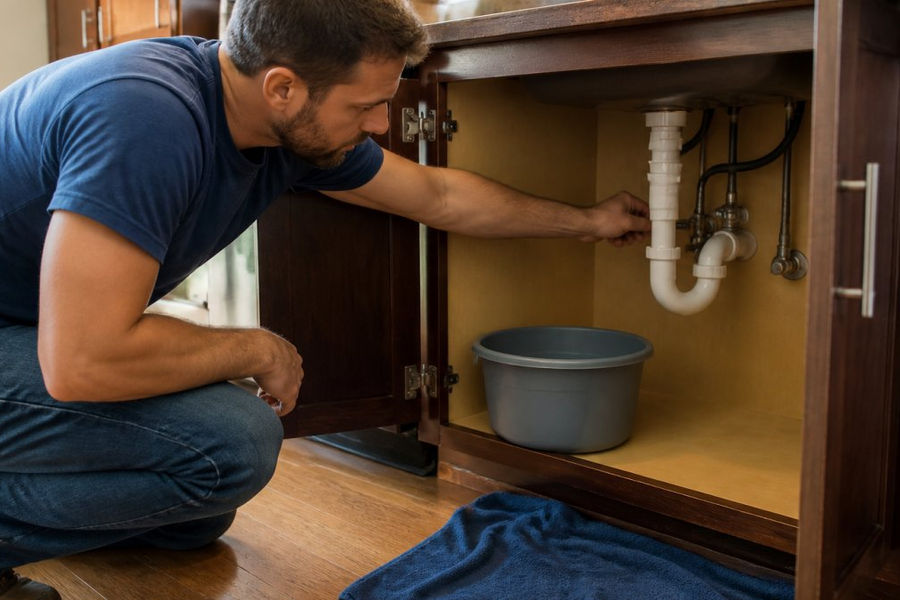
Shut Off the Water, Then the Power
Find your main shut-off valve first. In most homes it sits near the water meter or where the main line enters the house. Turn it clockwise until it stops. If the leak is at a single fixture, the valve under that sink or behind that toilet will do. Then cut power to any flooded area at the breaker box, because water and live electricity are a dangerous combination.
Contain the Damage and Document Everything
Once the water stops, move furniture and electronics away from the wet zone. Towels and buckets limit spread. Take photos and video of the damage before you clean anything. Your insurance company will want them, and so will any contractor verifying what happened.
Pro Tip Open a low faucet after shutting the main valve. It drains the remaining water from the pipes and reduces the spray when a plumber cuts into the line.
Plumber Response Time: What to Expect When You Call
"24/7" describes the phone line, not the truck. That distinction is the single most useful thing to understand before you call, because it determines whether you are talking to a dispatcher who can send a crew now or an answering service that will pass your message along in the morning.
When you reach a live dispatcher, the arrival window they give you is built from a handful of variables. Ask how each one is affecting your estimate:
Distance from the nearest on-call technician, not from the shop. A company with technicians staged across a service area can reach you faster than one dispatching everyone from a single location.
Time of day, overnight and early-morning calls usually have lighter traffic and fewer competing jobs, which can shorten the window. Late afternoon and early evening are the busiest.
Weather, a regional freeze produces a wave of burst-pipe calls at once. During those events, even a well-staffed company is stretched, and windows stretch with them.
Phone Line vs. Guaranteed Dispatch
These are not the same promise, and the difference matters at 2 a.m.:
What the company says | What it usually means |
"24/7 emergency service" | A live person answers any hour; dispatch depends on crew availability |
"24/7 dispatch" | A technician is sent when you call, subject to the current queue |
"Same-day service" | A visit is scheduled for today, but not necessarily within the hour |
"Priority emergency response" | Your call jumps the queue ahead of routine appointments |
Ask directly: "If I call at 2 a.m., does a technician get dispatched, or does someone call me back to schedule?" The answer tells you what you are actually buying.
What to Ask When You Call
Three questions produce a usable answer:
What is the estimated arrival window?
Will the dispatcher or technician call ahead before arriving?
Does the after-hours rate apply from the moment I call or from arrival?
A company that answers all three clearly is usually a company that shows up when promised. A company that deflects is telling you something too.
Pro Tip Get the arrival window in writing, even as a text message. It gives you a reference point if the crew runs late and something needs to be credited.
While You Wait
Use the time productively. Shut off the water at the main valve if you have not already, cut power to any flooded area at the breaker box, and move valuables out of the wet zone. Document the damage with photos before you clean anything. These steps reduce the total cost of the event regardless of how long the wait turns out to be.
Key Takeaway A 24/7 phone line is a promise about answering, not about arrival. Confirm whether dispatch is guaranteed, get the window in writing, and use the wait to stop the water and document the damage.
Emergency Plumber Cost: What Drives the Bill After Hours
Emergency plumbing costs more than daytime service, and that is fair. Crews are on call, and demand spikes at 2 a.m. But "it costs more" is not a number you can budget against. The useful move is to understand the fee structures that show up on an after-hours invoice, so you can ask about each one before a truck rolls.
Most emergency bills are built from a few separable line items. Ask which of these apply to your call:
Trip or dispatch fee, a flat charge for sending a crew to your address, whether or not the repair proceeds. This is sometimes waived if you approve the repair.
Diagnostic or service-call fee, the charge for identifying the problem. On a simple job this may be the only fee beyond the repair itself.
After-hours or overtime rate, the premium applied to labor outside standard business hours. It may be a flat surcharge or a multiplier on the hourly rate.
What to Confirm Before You Authorize Dispatch
A trustworthy company will answer these questions on the phone, before anyone is on the road:
What is the total minimum I will owe if you come out and I decline the repair?
Does the after-hours rate apply from the moment I call, or from the moment the technician arrives?
Is the estimate flat-rate or hourly, and what happens if the job runs long?
Will you get my written approval before doing any work beyond the original diagnosis?
What parts are you using, and are they under warranty?
How do you handle payment, and do you take cards on site?
If a dispatcher cannot answer questions 1 and 2 clearly, that is your signal to call the next company on your list. The price itself is less important than knowing the price before you say yes.
Watch Out Never authorize work on a verbal "we'll figure it out after." A written estimate, even a text message, before the technician starts is the single best protection against a surprise invoice.
Why the Final Number Varies
The same burst pipe can produce very different invoices depending on:
Time of day, a 3 p.m. call and a 3 a.m. call are not priced the same.
Accessibility, a leak behind a finished wall or under a slab takes longer to reach than one at an exposed fixture.
Parts availability, a standard shut-off valve is on the truck; a specialty part may require a supply-house run or a second visit.
None of this means you should accept an open-ended bill. It means the estimate should reflect these variables, and the company should be willing to explain which ones apply to your situation.
Key Takeaway Ask for the minimum charge, the after-hours trigger, and the pricing model (flat-rate or hourly) before you agree to dispatch. Those three answers tell you more about a company than any review score.
How to Verify a Licensed Plumber and Avoid Scams
Plumbing emergencies attract scammers because homeowners are stressed and in a hurry. The fix is simple: verify before you let anyone touch your pipes. Ask for the license number and confirm it with your state or local licensing authority.
Red flags to watch for:
Someone who shows up unrequested and claims to have "just been in the area"
Pressure to approve a large repair on the spot without a written estimate
Cash-only payment demands
The Federal Trade Commission's consumer guidance on home repair scams outlines how to spot these tactics and where to report them. A legitimate plumber will never hesitate to show credentials.
Choosing a 24/7 Emergency Plumber Near Me Now: What Matters
When water is pouring into your hallway, you do not have time to comparison shop. That is why the smart move is to pick your plumber before you need one. Save a number in your phone today, and you will never be scrolling through search results at midnight while your basement floods.
Here is what separates a company worth calling from one worth avoiding:
What to Check | Why It Matters |
True 24/7 availability | A live person answers, day or night, not a voicemail box |
Licensing and insurance | Protects you if something goes wrong on the job |
Upfront pricing | You know the after-hours fee before the truck rolls |
Local service area | Faster arrival times and familiarity with local systems |
Reviews and reputation | Past customers confirm the company shows up and delivers |
Causeway Plumbing LLC is open seven days a week, staffed by an experienced team that handles everything from routine drain cleaning to complex water and sewer line repairs.
Frequently Asked Questions
How quickly can an emergency plumber arrive?
Response time depends on your location, the time of day, and how many calls the company is handling. Many 24/7 providers aim to reach residential addresses within one to two hours for true emergencies like burst pipes or sewer backups. When you call, ask for a specific arrival window and confirm whether the dispatcher will text you an update if the technician is delayed. Get the dispatcher's name and a callback number so you can follow up if needed.
How much does an emergency plumber cost?
Emergency plumber cost depends on the type of repair, the time of day, and whether parts need to be replaced. After-hours calls usually carry a higher service fee than standard weekday rates. Before you approve any work, ask for the trip charge, the hourly rate, and whether the after-hours fee is included or added separately. A reputable company will explain the pricing structure upfront and confirm the scope before starting.
What should I do while waiting for an emergency plumber?
Shut off the main water valve to stop the flow, then turn off electricity to any affected area at the breaker box if water is near outlets or appliances. Move furniture and valuables away from the water, place towels or buckets to contain the spread, and take photos for your insurance claim. If you smell gas, leave the building and call your gas utility from outside before calling a plumber.
How can I verify a plumber's license and insurance?
Ask for the license number and the company's insurance certificate before work begins. You can verify a plumbing license through your state's licensing board or department of professional regulation. For insurance, request a certificate of insurance showing general liability and workers' compensation coverage. A licensed, insured plumber protects you from liability if a worker is injured on your property or if the repair causes damage.
A plumbing emergency is stressful enough without wondering whether the person you called will show up, charge fairly, or know what they are doing. Causeway Plumbing LLC keeps residential and commercial systems running smoothly across the greater Hampton Roads area with a dedicated service department, transparent communication, and a team that treats every property like its own. When you need help now, get in touch with Causeway Plumbing LLC and get the problem handled right the first time.
Get In Touch


Comments